

Toyota, Intelligent Forecasting & Scenario Planning (IFSP)
Designing a scalable enterprise forecasting platform aligned to a unified system.
Overview
Toyota was working to bring its Intelligent Forecasting & Scenario Planning (IFSP) vision to life while modernizing its existing GPS system. Over time, the platform had become fragmented, both in experience and in its alignment with the Prime Design System. This led to inconsistencies across products, increased design and development inefficiencies, and made it difficult to scale a cohesive experience across the ecosystem.
My Role
Led UX efforts across discovery, design, and system alignment.
Drove stakeholder consensus around product vision, goals, and requirements.
Led audit and application of the Prime Design System across existing experiences.
Partnered closely with product, engineering, and design leadership to ensure feasibility and adoption.
Approach
Rather than focusing on isolated screens, I approached the work as a system-level problem, aligning product vision, user workflows, and design system standards.
Synthesized stakeholder input and business context to define direction.
Mapped end-to-end user journeys to identify friction and opportunities.
Audited the existing GPS system to uncover gaps in the design system adoption.
Applied Prime Design System patterns to key workflows to demonstrate a scalable path forward.
Key Decisions & Tradeoffs
Prioritized long-term consistency with the Prime Design System rather than optimizing individual screens and products in isolation.
System alignment over one-offs
Scalability over speed
Focused on establishing patterns that could scale across products, even when it required additional upfront alignment and design work.
Simplified workflows and information structure to reduce cognitive load in complex forecasting scenarios.
Clarity over complexity
The Solution
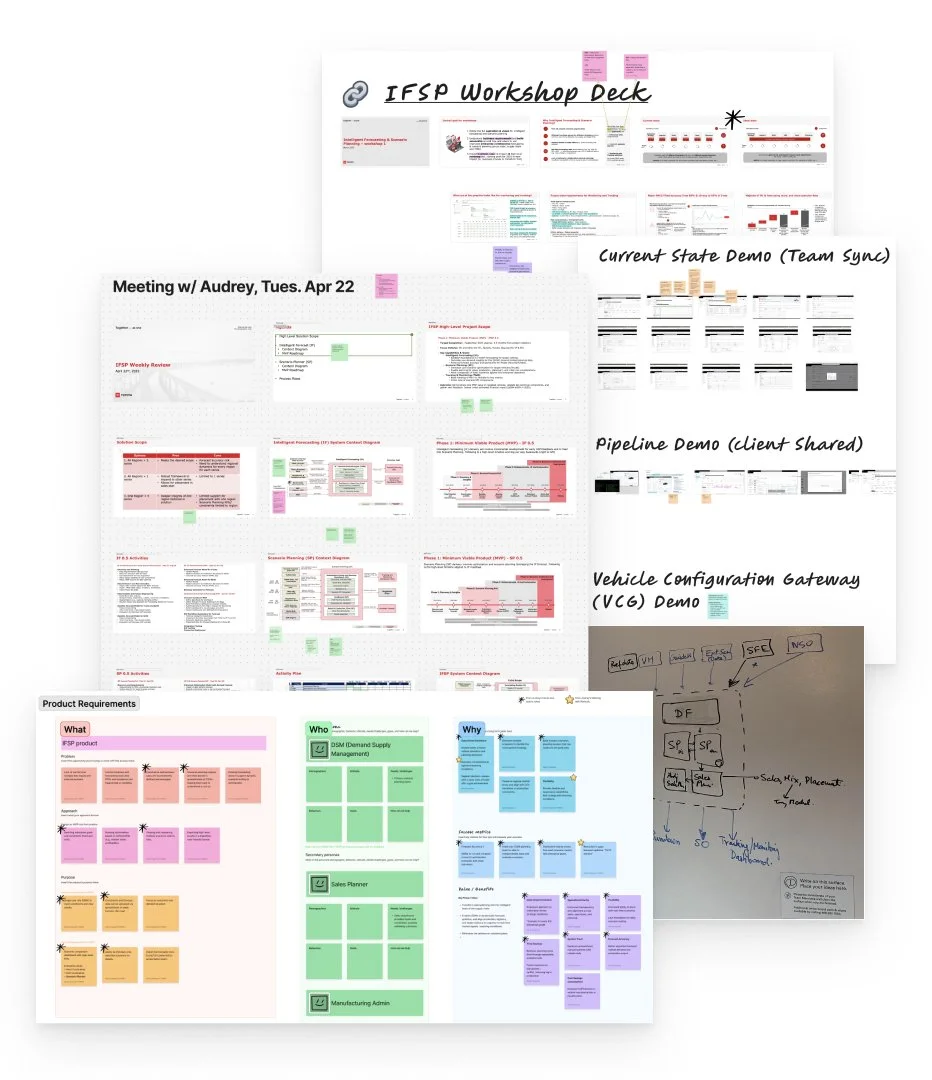
Discovery
Process to Understand
Stakeholder Interview
One stakeholder interview was conducted as a group to uncover the stakeholders’ vision, goals, and strategic focus areas.
Business & Documentation Review
The team reviewed internal documentation, business decks, and research to establish context and synthesize business objectives and understanding to help gather product requirements.
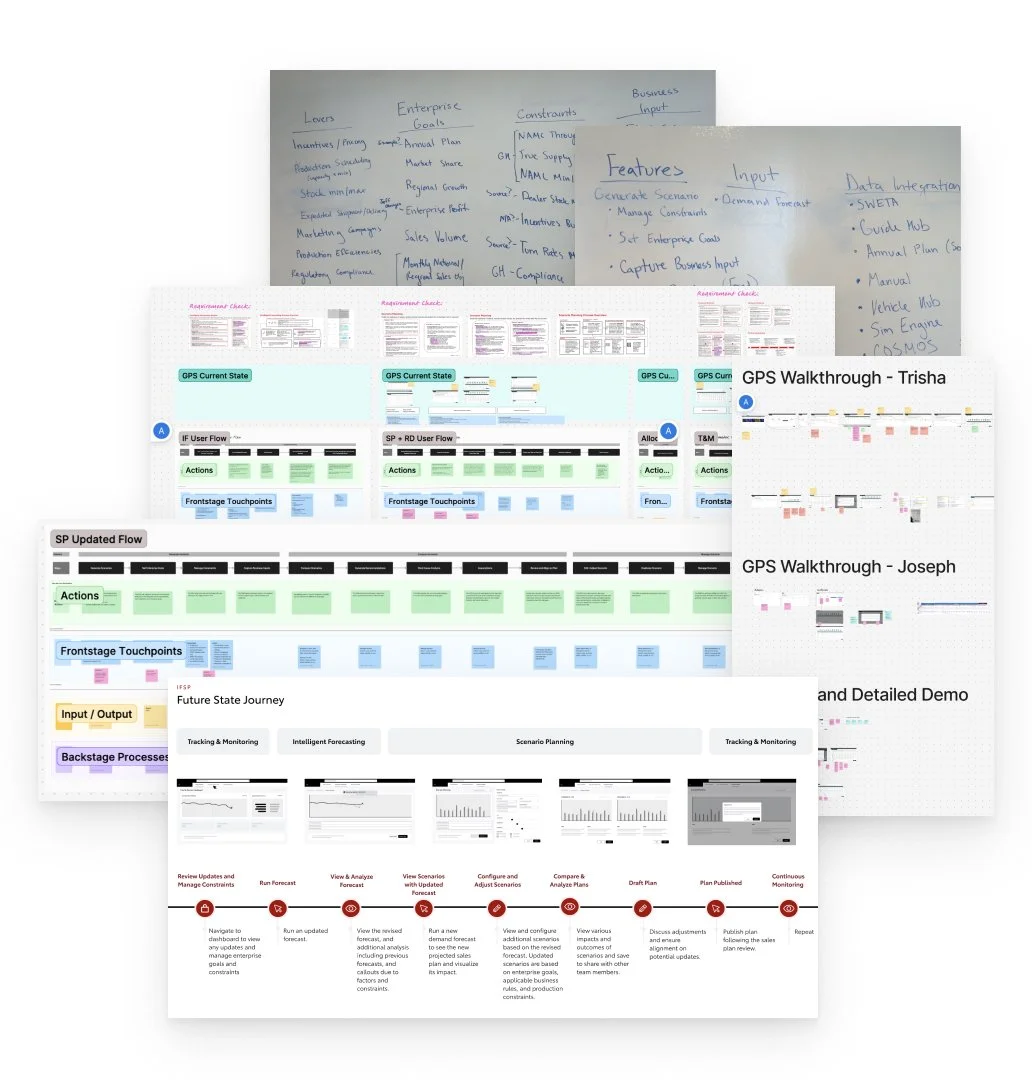
User Experience
Mapped and refined user journeys to streamline task flows, clarify navigation, and reduce friction across forecasting scenarios.
Workflow Restructuring
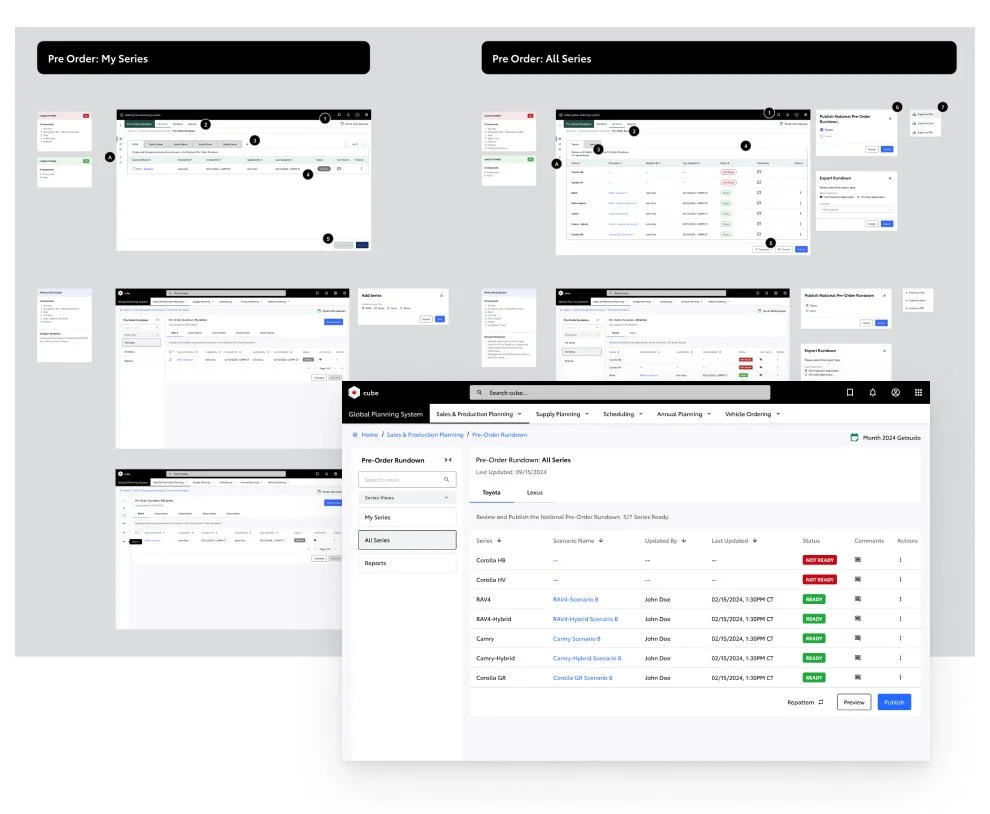
System Alignment & Modernization
Applied Design
Audited current GPS screens and components and evaluated alignment with Prime to identify system gaps and prioritize needs for design system adoption.
Applied the Prime Design System to key areas of the platform to establish consistency, improve usability, and create a foundation for scalability.
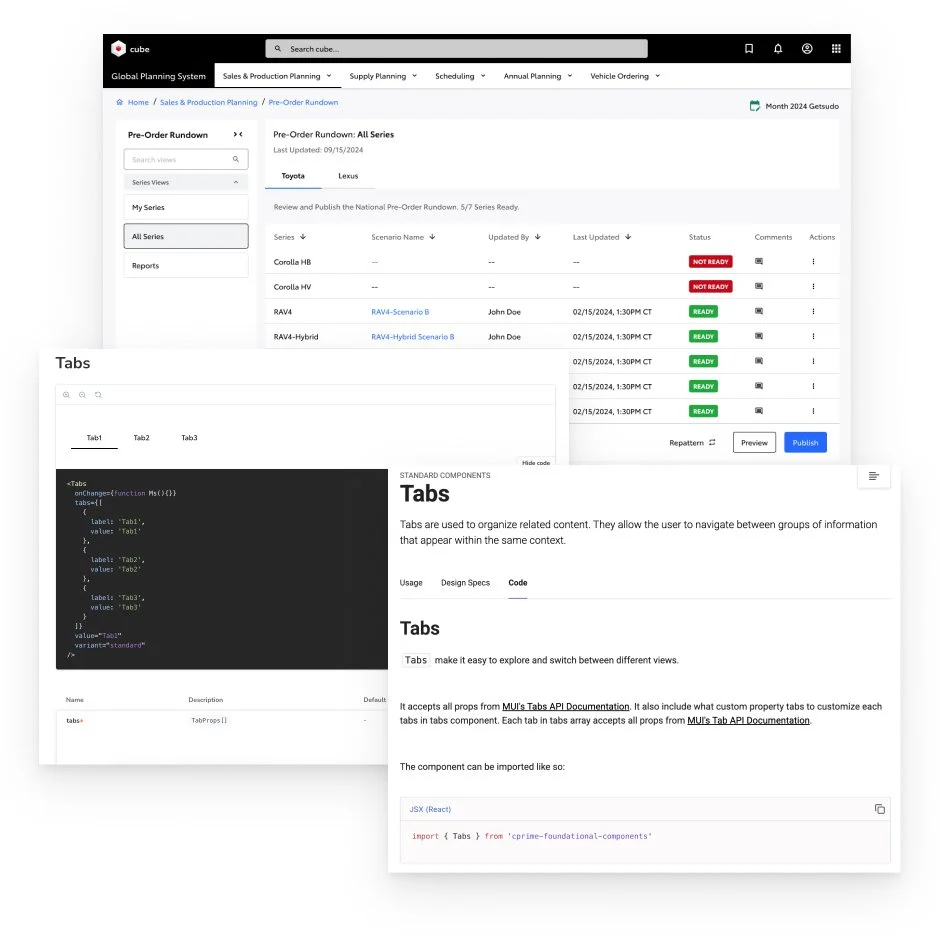
Design + Development Integration
Collaborated closely with front-end development and Prime team to validate component implementation, ensuring alignment between design specifications and production-ready components (Storybook / zero-height).
Outcome
Improved consistency across the platform through alignment with the Prime Design System.
Established a scalable foundation using the Prime System for future product development.
Reduced friction in complex workflows through clearer structure and navigation.
Strengthened collaboration between design and engineering through shared system standards.
Driving Alignment Through Change Control
The Problem
Ongoing changes to requirements and design decisions during development created:
Misalignment across design, product, and engineering
Rework and inefficiencies in delivery
Lack of visibility into decision history and rationale
Approach
Introduced a structured change control process to bring clarity and accountability to in-flight decisions:
Formalized tracking of all design and requirement changes within Jira
Required visibility and alignment before implementation
Established a shared understanding of impact across scope, timelines, and delivery
Outcome
Improved alignment across cross-functional teams
Reduced unnecessary rework and delivery risk
Increased transparency and accountability in decision-making