

John Deere: Pro Landscape
Designing operational tools to streamline complex workflows for field crews.
The Problem
Professional Landscape Contractors (PLCs) rely on a suite of tools to manage crews, equipment, scheduling, and property data. However, these workflows were fragmented, making it difficult to efficiently plan, execute, and measure work in real-world environments.
Additionally, gaps in team alignment and process consistency created friction in delivery, impacting both product clarity and execution speed.
A key opportunity was to unify these workflows while integrating Measure, a tool for property digitization and AI-assisted measurements, into a more cohesive system.
My Role
As a senior experience designer, I supported and influenced design across a complex platform.
Designed and validated workflows for crews, scheduling, and property management.
Streamlined complex workflows across crews, scheduling, and property management.
Improved alignment between estimated and actual performance metrics.
Partnered with product, engineering, and leadership to align requirements and execution.
Established clearer collaboration, decision-making, and delivery processes across design, product, and engineering.
Approach
Focused on simplifying operational complexity across the product and our team's work.
Mapped workflows across crews, scheduling, and property management to identify friction points.
Designed task-oriented experiences to improve clarity and usability in field operations.
Introduced more structured collaboration and design processes to improve alignment.
Supported integration of Measure to enhance property insights and workflow efficiency.
Key Decisions & Tradeoffs
Workflow clarity over feature expansion.
Prioritized simplifying high-frequency tasks instead of adding additional complexity.
System cohesion over isolated tools.
Focused on connecting workflows across crews, scheduling, and property management.
Structured alignment over ad hoc decisions.
Introduced clearer ownership, checkpoints, and communication to reduce rework and confusion.
The Solution
Operational Workflow Design
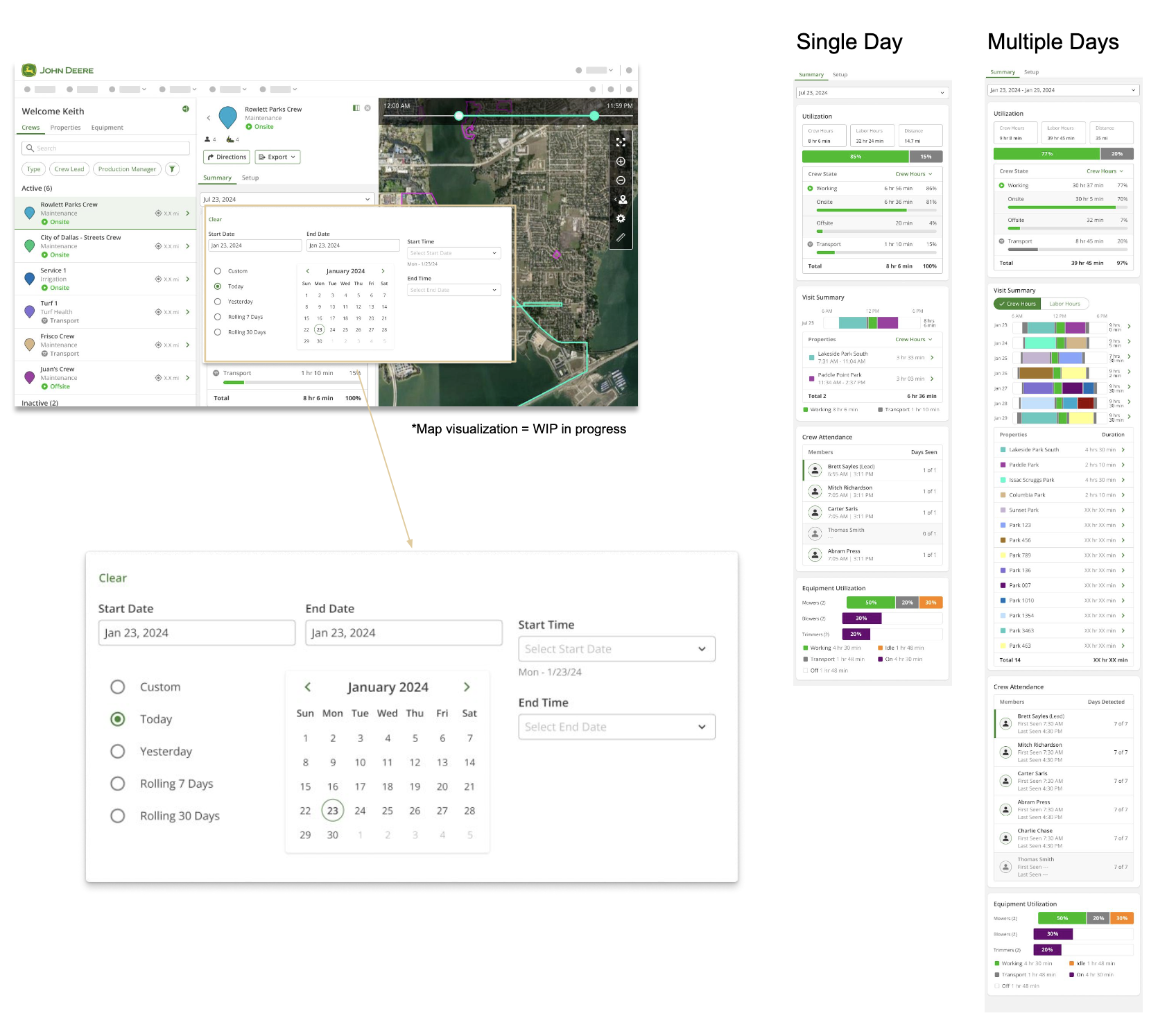
Redesigned core workflows to support how PLCs plan, execute, and monitor work across crews, equipment, and properties.
Centralized crew visibility with active/inactive states, filtering, and search.
Integrated map-based views for real-time understanding of crew and property locations.
Enabled deeper insights into crew utilization, attendance, and job history.
Crew & Map Monitoring
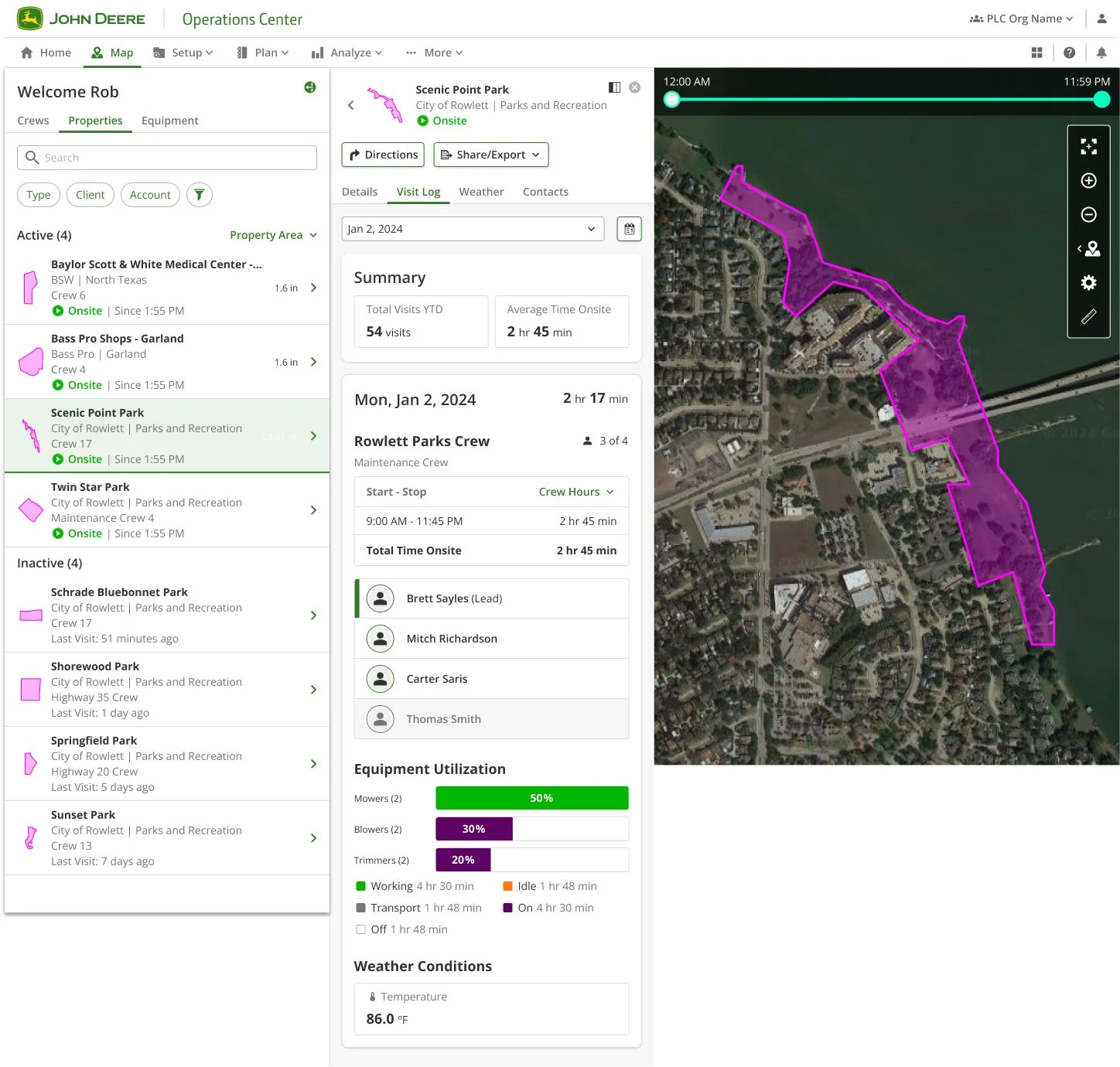
Property Measurement Integration
Defined workflows for property digitization and measurement.
Supported integration of AI-assisted measurement capabilities.
Created conceptual designs and validated requirements through research and iteration.
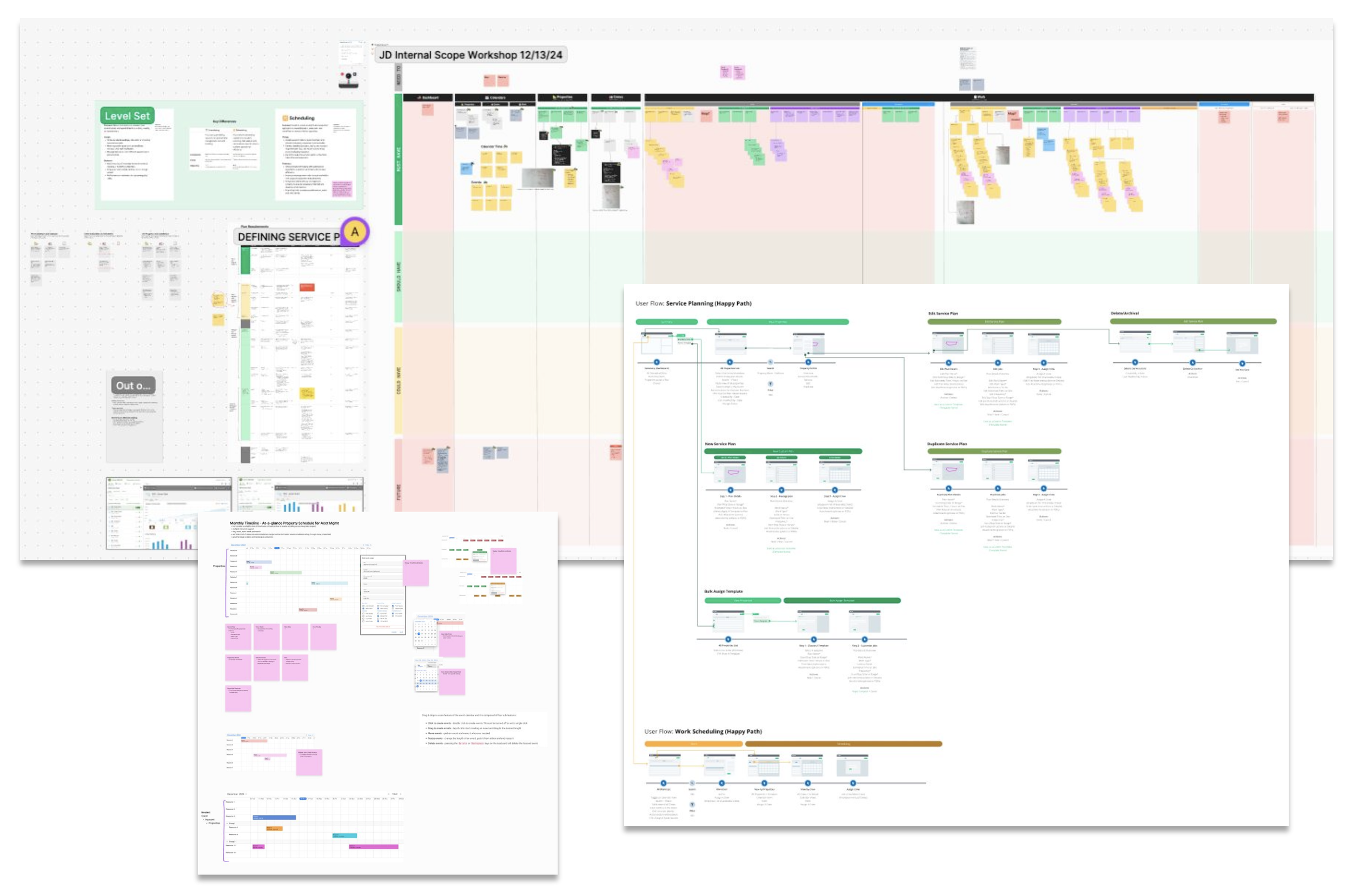
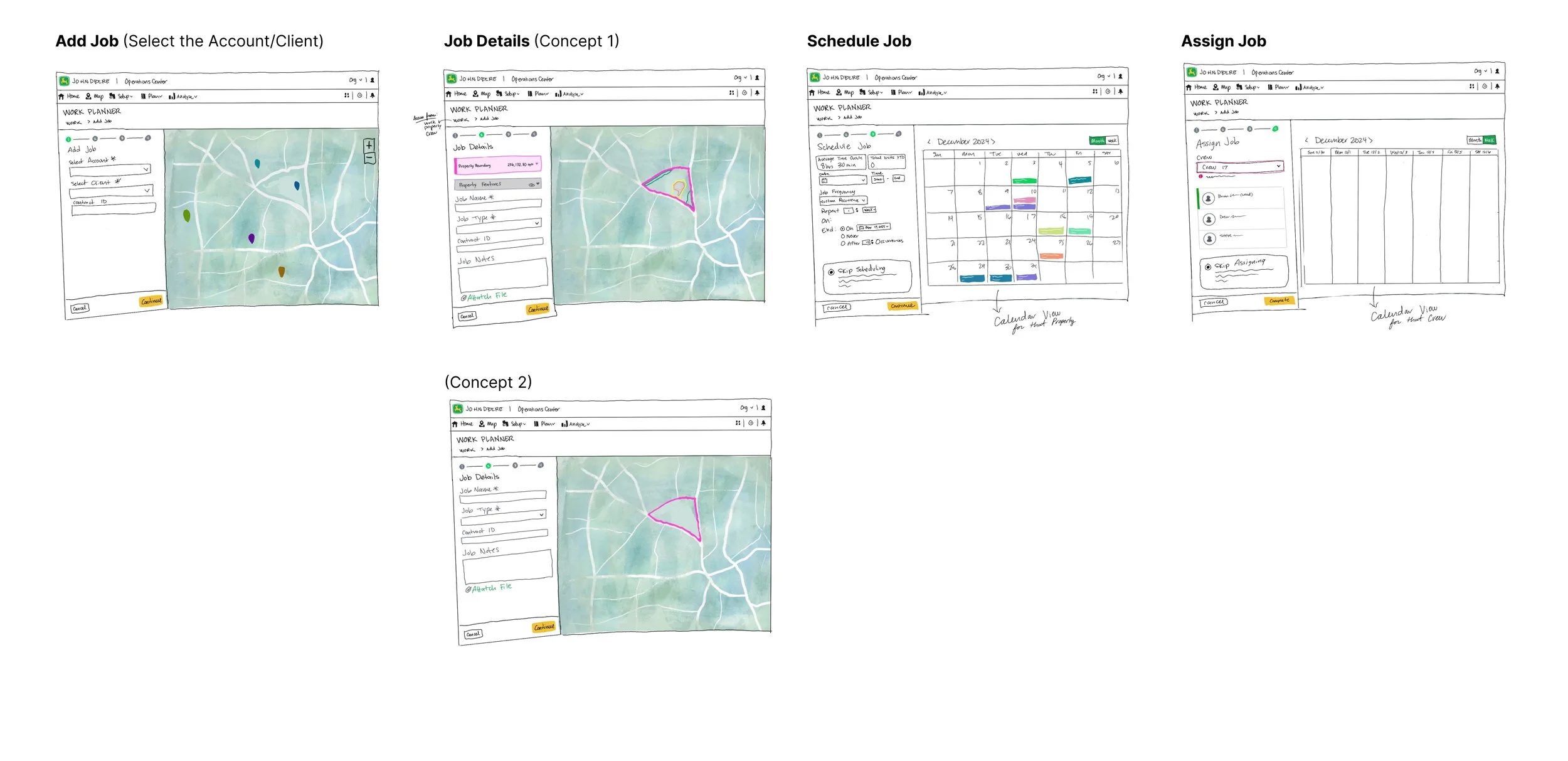
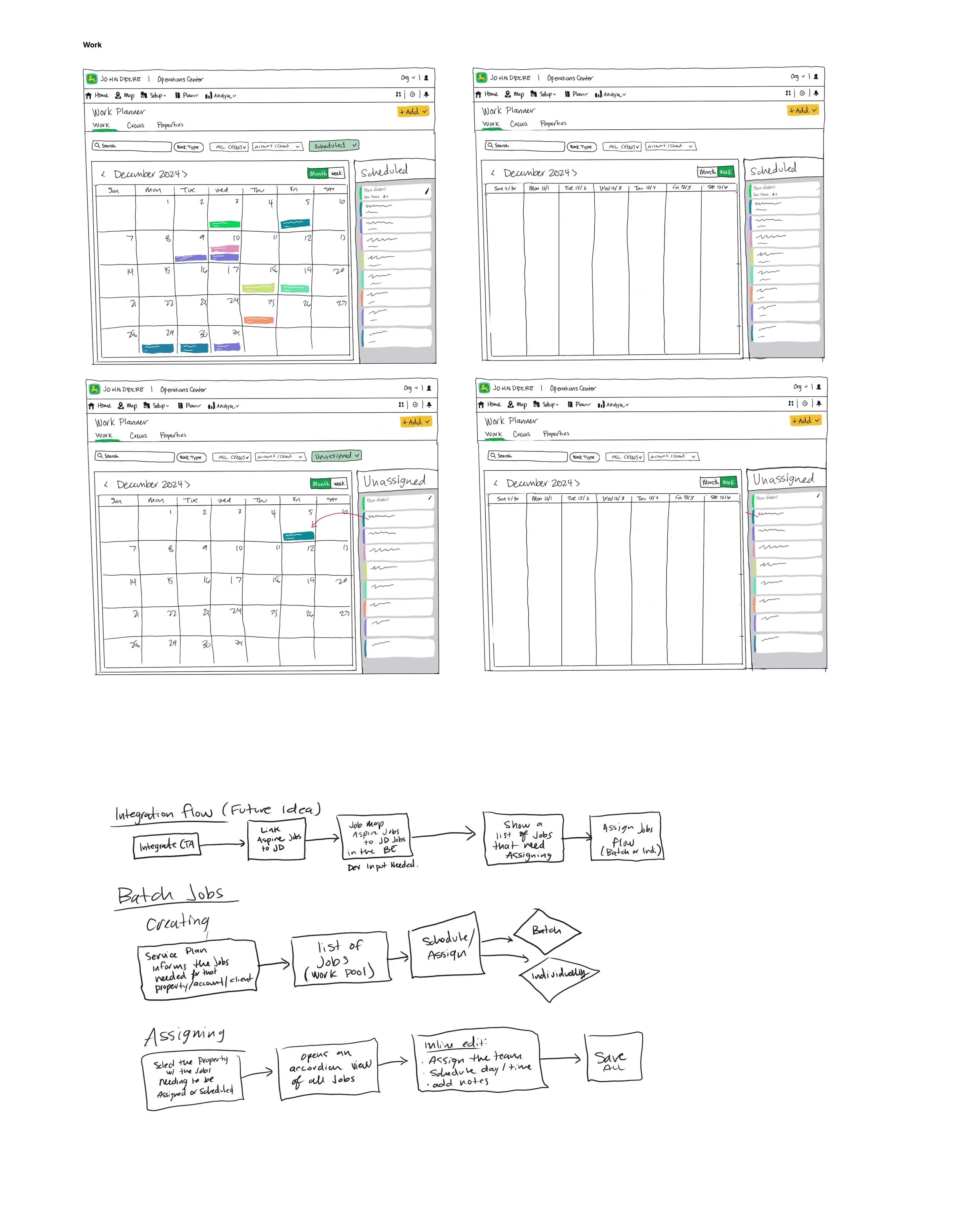
Work Planning & Scheduling
Designed workflows for planning and managing work across teams.
Mapped user journeys and aligned features to real operational needs.
Delivered wireframes and validated designs for implementation.
Improved usability across complex, high-frequency operational workflows.
Enabled better visibility into crew performance and property data.
Strengthened alignment between design, product, and engineering teams.
Created a more structured foundation for ongoing product development.
Outcome
Driving Better Collaboration & Delivery
The Approach
Introduced more structured ways of working to improve clarity and accountability:
Defined ownership and responsibilities across design tasks
Implemented clearer feedback cycles and decision checkpoints
Established documentation and tracking of changes to improve visibility
Strengthened communication across the team and client stakeholders
The Challenge
Inconsistent processes and unclear ownership created inefficiencies in design and delivery:
Misalignment across design, product, and engineering.
Duplicated work and rework due to unclear decision ownership.
Late-stage changes disrupting timelines and team momentum.
Outcome
Improved alignment and trust across the team.
Reduced rework and duplicated effort.
Increased consistency in delivery and decision-making.
Increased the speed of delivery.
Helped improve alignment and client stakeholders.