


Product Mapper
An AI-Assisted Tax Categorization Platform for Enterprise Retail at Scale
Overview
Ryan Tax set out to solve a complex enterprise challenge: how might we streamline and scale tax categorization across millions of retail products while maintaining accuracy and compliance?
In partnership with Dialexa (prior to IBM acquisition), Ryan envisioned a new AI-powered solution: a Product Mapper that could intelligently map product SKUs to tax categories and ultimately become a sellable platform for enterprise partners.
As Design Lead during early discovery, I helped shape the product vision, facilitate stakeholder alignment, and design the foundational user experience for an AI-assisted workflow that balanced automation with human expertise while managing another designer.
The solution ultimately proved successful enough that Ryan commercialized and sold Product Mapper to Vertex, a leading tax technology company, which continued product development and retained Dialexa services post-acquisition.
Early Enterprise AI Adoption at Dialexa
Before generative AI became mainstream, we were designing human-in-the-loop AI systems for enterprise decision-making.
My Impact
Led UX during early product discovery
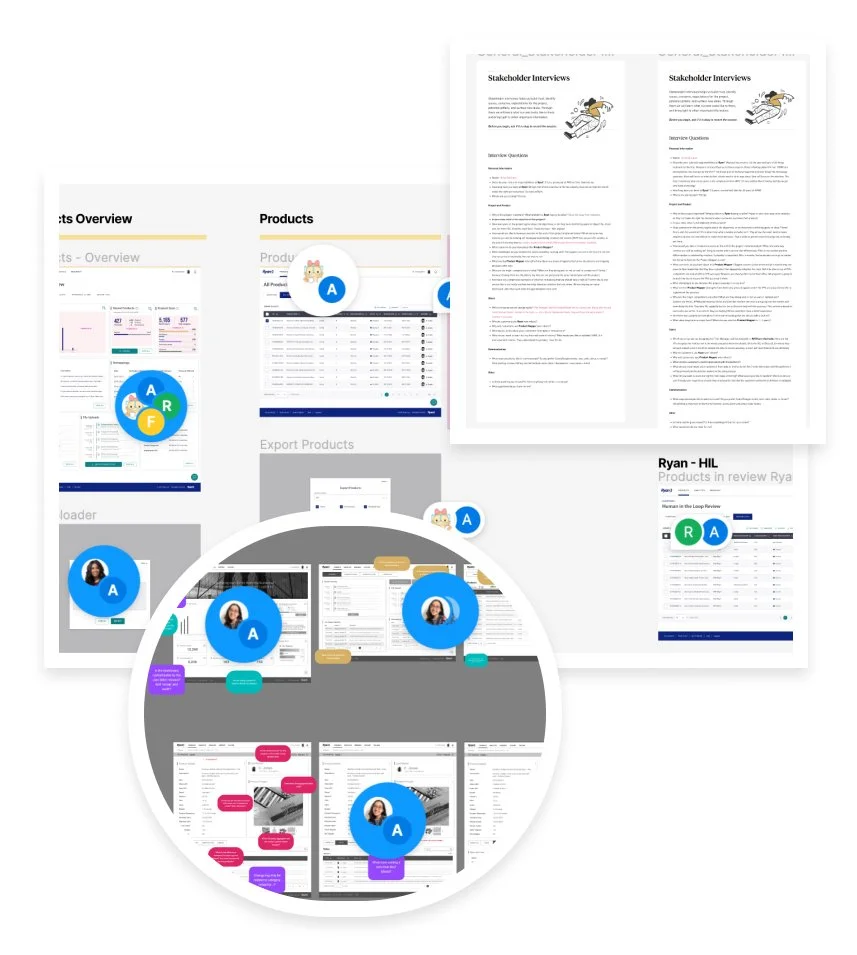
Facilitated stakeholder interviews & SME workshops
Designed AI-assisted enterprise workflows
Created wireframes & interactive prototypes
Validated concepts with SMEs
Applied Ryan ACE design system for scalable UI
Helped shape a product later acquired by Vertex

The Challenge
Retail tax categorization is highly complex.
Large retailers such as Kroger and Walmart maintain extensive product catalogs where individual SKUs must be mapped to highly specific tax categories. Misclassification can lead to compliance risk, operational inefficiencies, and costly downstream impacts.
Ryan needed a scalable solution that could:
Reduce manual tax categorization efforts
Improve consistency and accuracy
Leverage AI to accelerate categorization
Maintain expert oversight to validate outputs
Create a marketable product for external partners
At the time, enterprise AI adoption was still emerging, making this an ambitious and forward-looking initiative.

My Role & Contributions
-
I joined the engagement during the early discovery phase, partnering closely with:
Data Engineers
Software Engineers
Solution Architects
Ryan Tax stakeholders
Subject Matter Experts (SMEs)
My responsibility was to bridge technical complexity, business requirements, and user workflows into an experience that could operationalize AI in a trustworthy way.
-
Led and facilitated discovery efforts to understand business needs, workflows, and technical constraints.
Activities included:
Stakeholder interviews
SME workshops
Cross-functional working sessions
Requirement synthesis
Workflow definition and prioritization
Through collaborative discovery, we identified a critical requirement:
AI alone could not make categorization decisions.
The experience required a human-in-the-loop model in which experts validated recommendations to continuously improve the model's accuracy. -
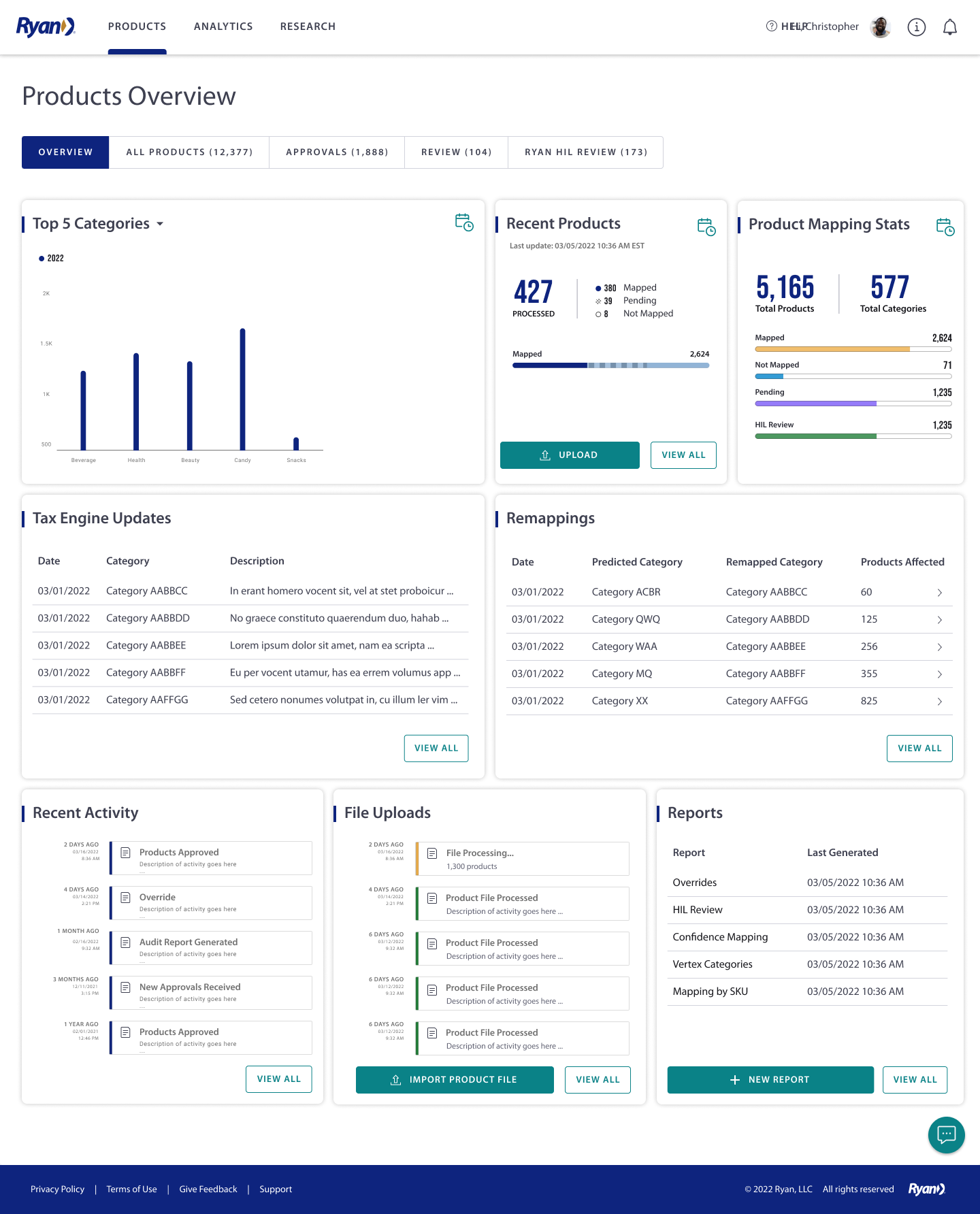
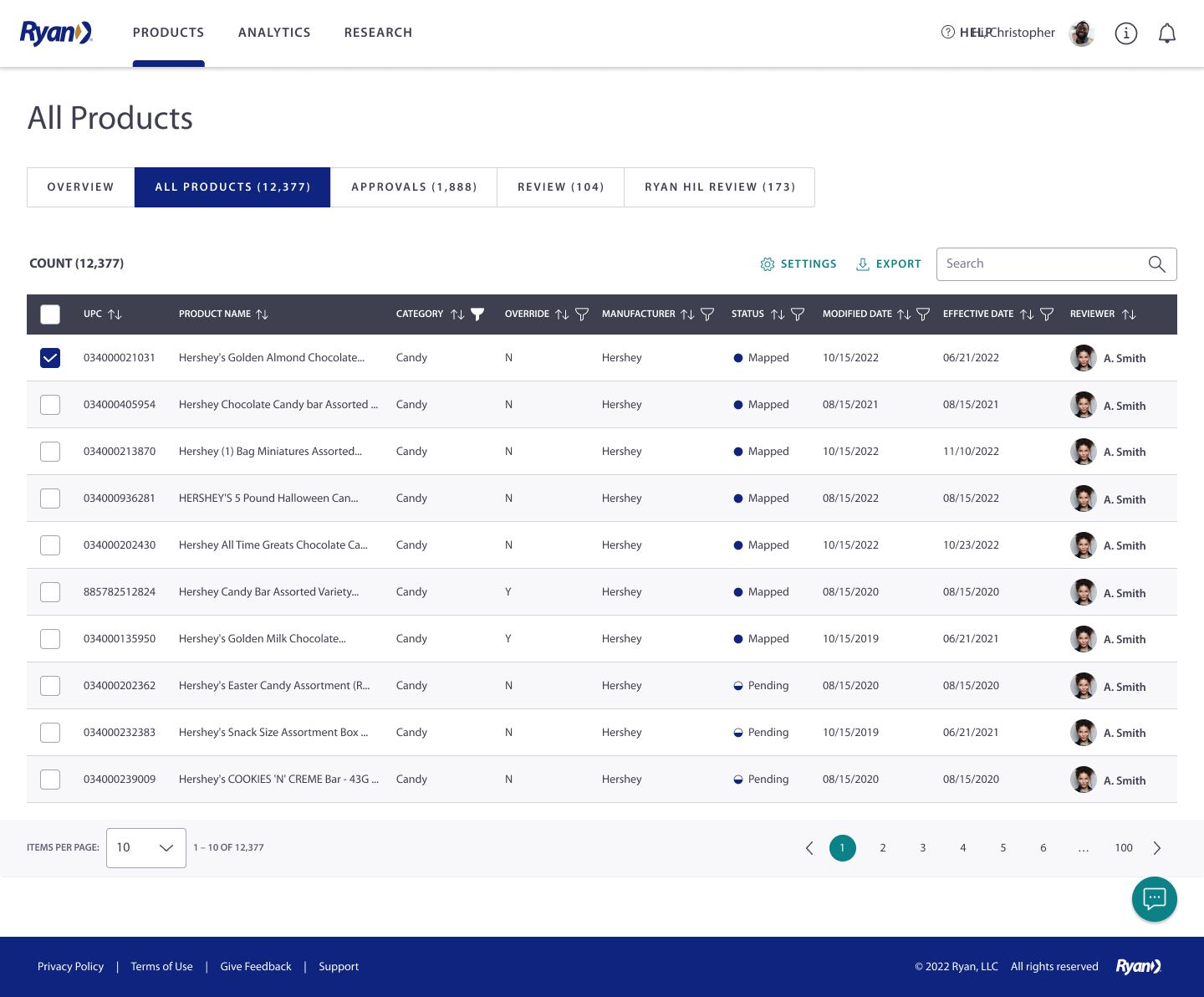
I translated discovery insights into an intuitive enterprise workflow that enabled users to:
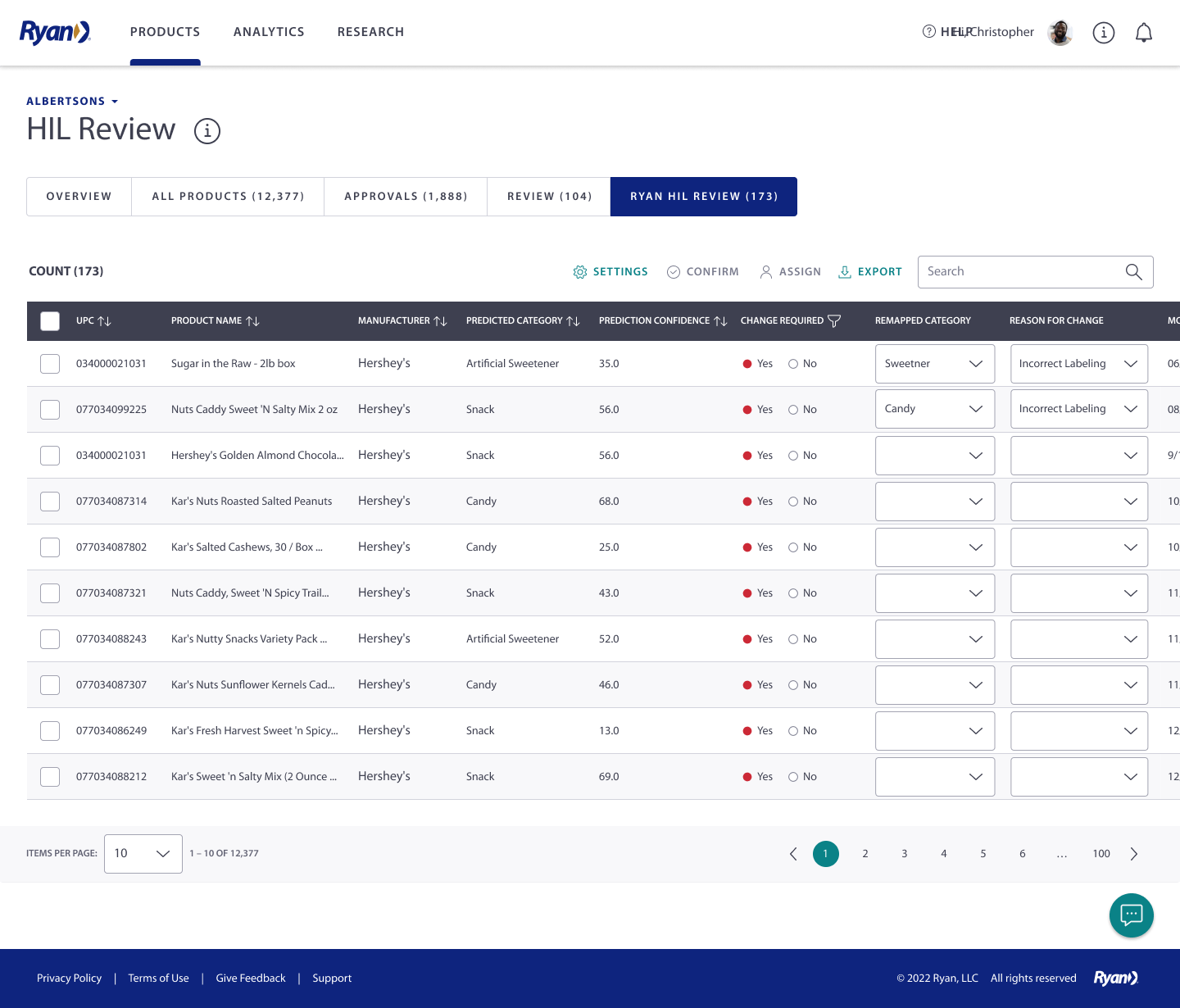
Review AI-generated category recommendations
Map product SKUs to tax classifications
Validate and correct outputs
Improve model learning over time
Maintain transparency into categorization history
The design is intentionally balanced:
Automation + Human Expertise + Explainability
This built trust in the system and supported long-term AI training.
-
I designed:
Low- and high-fidelity wireframes
End-to-end workflows
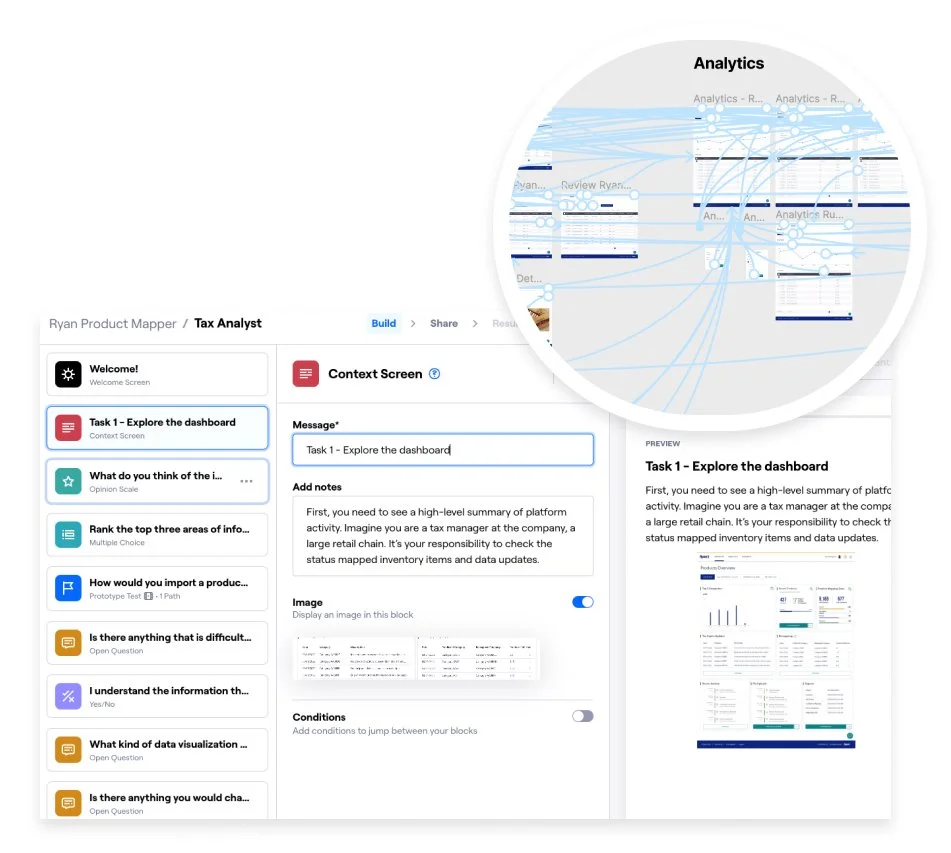
Interactive prototypes for validation
Experience concepts for SME testing
To accelerate delivery and ensure consistency, I leveraged the Ryan ACE Design System, one that my prior team had helped establish, enabling rapid UI implementation for the Product Mapper experience.
Prototypes were tested with SMEs to validate:
Workflow efficiency
Tax categorization confidence
Human validation steps
Information architecture and usability
These validation sessions helped refine the product before engineering scale-up.
The Solution
Product Mapper became an AI-assisted tax categorization platform designed to clean, enrich, and structure product data for machine learning.
The system enabled:
AI-Powered Tax Categorization
Automated SKU classification recommendations based on product data and historical tax knowledge.
Human-in-the-Loop Validation
Tax experts reviewed and verified AI recommendations to ensure compliance and continuously train the model.
Data Enrichment
Additional attributes were applied to improve inference quality and reduce manual research.
Enterprise Workflow Transparency
An interactive mapping workflow surfaced categorization history, decisions, and insights to build trust and auditability.
Outcome & Impact
The engagement exceeded its original vision.
Ryan successfully transformed Product Mapper into a commercializable enterprise product and ultimately sold the solution to Vertex, a market leader in tax technology.
Following the acquisition:
Vertex continued product development
Dialexa remained engaged to evolve the platform
The solution was adapted to align with the Vertex ecosystem and brand
Interestingly, Ryan later experienced buyer’s remorse, which led them to re-engage Dialexa for additional product innovation work, reinforcing the strength of the partnership and the value created.
Lessons Learned
Early AI requires trust, not just automation
Even strong AI recommendations benefit from expert validation. Designing for human oversight was essential to adoption and accuracy.
Enterprise AI is only as good as its data
Cleaning, structuring, and enriching data proved foundational to training reliable models.
Cross-functional collaboration accelerates innovation
Bringing together design, engineering, architecture, SMEs, and business stakeholders early enabled faster alignment and stronger product outcomes.
Adoption matters as much as technology
Success depended not just on model performance, but on creating a workflow users trusted enough to integrate into their daily work.